Marine VFD Retrofit Systems for Pumps and Fans
Variable frequency drives adjust motor speed in real time to match what your vessel actually needs: reducing energy consumption, extending equipment life, and paying back within one to two years.
Why auxiliary systems are the most overlooked efficiency opportunity in your fleet
Marine cooling pumps and ventilation fans are designed for worst-case conditions: seawater at 32°C, ambient air at 35°C, main engine at full output. In practice those conditions are rare. On temperate or northern routes, or with engines running under slow-steaming or de-rating programmes, auxiliary systems consume energy calibrated for a peak that rarely arrives. Fixed-speed motors manage the gap through valve throttling and flow bypass — workable, but wasteful.
EnergyOpt Variable Frequency Drives close that gap by adjusting motor speed in real time to match actual demand. The relationship is not linear: a 20% reduction in motor speed reduces power consumption by approximately 49%. A 30% reduction delivers around 66% saving. These are not projections — they are the affinity law for centrifugal machines, and they apply across every hour of operation.
Where EnergyOpt delivers the greatest return
Seawater cooling pumps
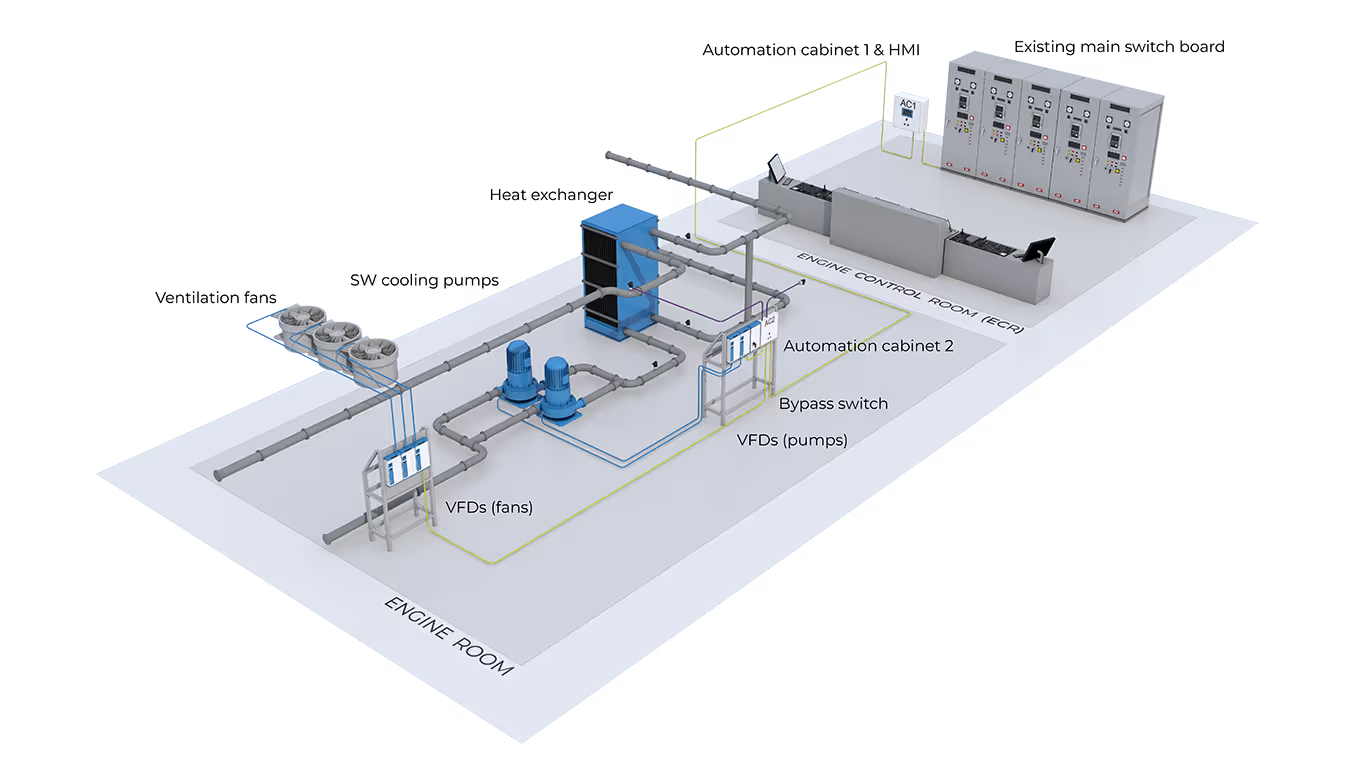
SW cooling pumps are the primary target in most retrofit programmes. They run continuously, are sized for peak thermal rejection, and are typically controlled through valve throttling on fixed-speed installations. EnergyOpt replaces throttling with motor speed modulation driven by cooler outlet temperature and differential pressure feedback. On temperate or northern routes, these pumps spend the majority of the operating year well below design speed — delivering the largest single efficiency gain in the system.
Engine room ventilation fans
Ventilation fans are sized for a main engine at full MCR output. With engine de-rating increasingly standard for CII compliance and fuel efficiency, fans are systematically oversized for actual operating conditions. EnergyOpt tracks engine load via temperature and differential pressure measurements, reducing fan speed proportionally. Speed reductions of 20–30% are typical during de-rated operation, delivering power savings on the fan of 50–65% during those periods.
LT freshwater cooling pumps
Low-temperature cooling circuits serve auxiliary equipment and charge air coolers. EnergyOpt controls these using differential pressure feedback, maintaining stable flow and temperatures while reducing consumption. Tighter temperature control also delivers secondary benefits for charge air cooler performance.
Complete turnkey delivery. Zero commercial downtime.
EnergyOpt is delivered as a fully managed project from initial engineering survey through commissioning and handover — no additional suppliers, no sub-contractors. Installation can be carried out during dry docking, at berth, or under operation. Our dedicated teams in Gdansk, Rotterdam, and Shanghai adjust the programme to your vessel’s operational pattern.
Scope list
- Project management, scheduling, and regulatory interface
- Electrical design: single-line updates, cable routing, interface specifications
- Process engineering: control philosophy, sensor placement, setpoint definition
- Automation: PLC programming and HMI development
- Procurement: class-approved VFDs, panel builds, sensors, and cabling
- Class approval: documentation and submission to flag state and classification society
- Installation survey: onboard verification before equipment delivery
- Commissioning: energisation, loop testing, control tuning, crew handover
The EnergyOpt system interfaces with the existing group starter panel. From the crew’s perspective, the panel operates exactly as before. No new procedures. No retraining.
Built to marine standards. Backed by class.
Component selection
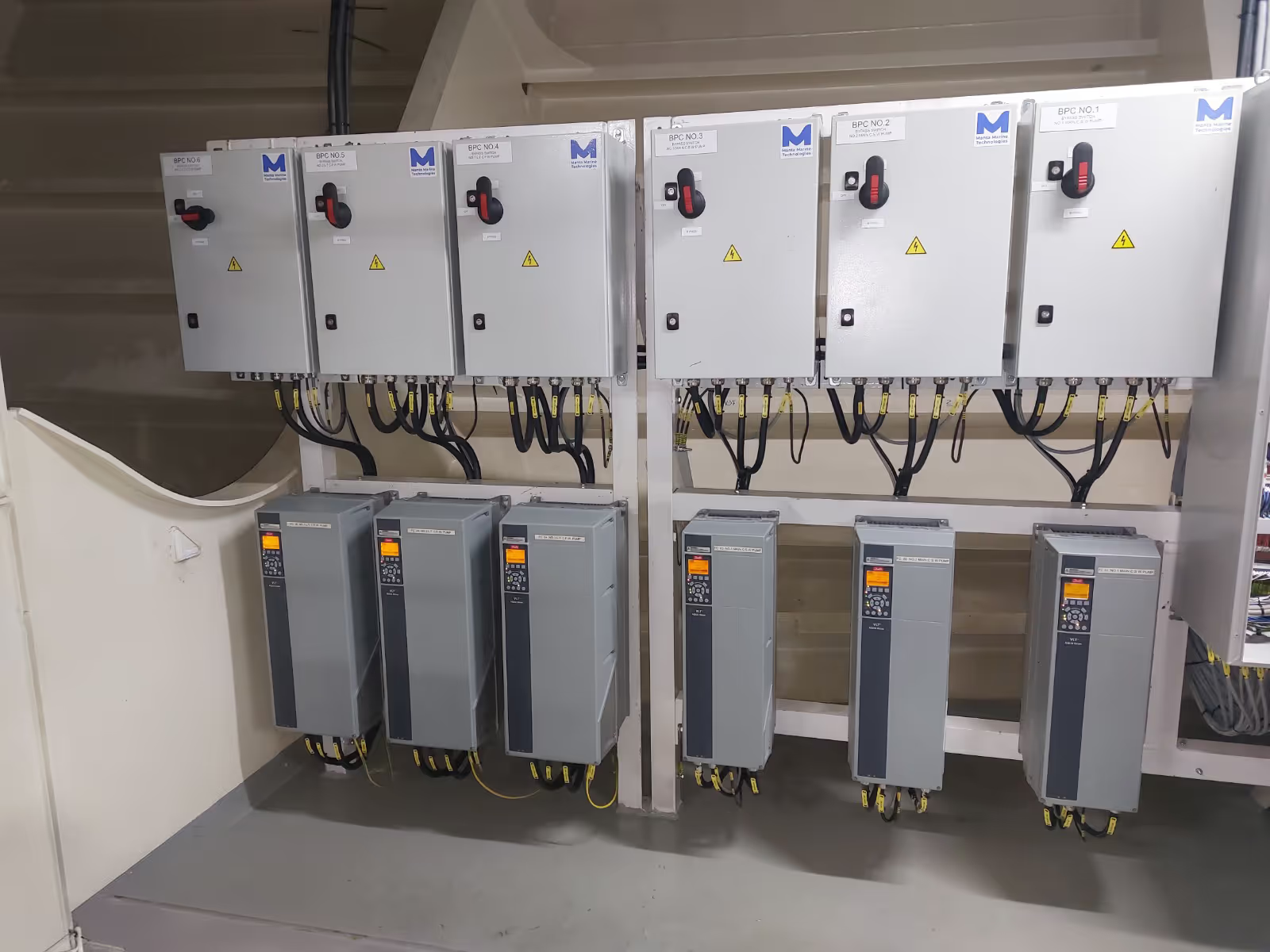
All VFDs supplied through EnergyOpt carry type approval from the major classification societies — ABS, BV, DNV, LR, and NK — tested for marine shock, vibration, humidity, and EMC requirements. A range of cabinet configurations and IP classes are available, matched to the specific installation environment of each vessel.
Bypass
Manual bypass is standard on all EnergyOpt installations, restoring direct-on-line operation in the event of a drive fault. For critical services, automatic bypass — which engages without crew intervention — is available and recommended. Both options are evaluated in conjunction with the customer and class society based on ISO 8861 standards and existing pump or fan redundancy.
Class documentation
Manta Marine manages all plan approval documentation and class submission as part of the project scope. Documents provided include:
- Electrical drawings (modified drive E-plans)
- List of Control and Monitoring Points (signal and alarm list)
- Piping and Instrument Diagrams
- Type Approval Certificates for all VFDs and cables
Savings you can see - and prove
EnergyOpt records and displays energy, fuel, and CO₂ savings in real time on the onboard HMI panel. Crew can see kilowatt-hours saved, percentage reduction against fixed-speed baseline, fuel tonnes saved, and CO₂ avoided, updated continuously during operation. For fleet managers and technical superintendents, the data is available onshore through integration with Fleet Analytics or via data export from the vessel's existing onboard systems. This makes EnergyOpt savings directly reportable under EU ETS and CII frameworks, and gives charterers verified emissions performance data rather than estimates.


talk to one of our experts

Christoffer Ahlström
Christoffer has an extensive background in engineering and he has been driving the development of SOx scrubber-, SCR-, Wind Assisted Propulsion- and Shore Power Systems. He has previously had roles in Manta Marine as Electrical/Automation Manager, Technical Manager and Engineering Manager.
talk to one of our experts
Christoffer Ahlström
Christoffer has an extensive background in engineering and he has been driving the development of SOx scrubber-, SCR-, Wind Assisted Propulsion- and Shore Power Systems. He has previously had roles in Manta Marine as Electrical/Automation Manager, Technical Manager and Engineering Manager.

